Kostenloser Infoabend
Lernen Sie uns kennen!24.Juli 2018 um 17:30 UhrLainzerstraße 6, 1130 Wien


Setzen Sie sich mit uns in Verbindung
 | +43/1/877 77 75 |
 |  |
 |  |
Was unsere Patienten sagen
Sehr geehrte Frau Dr. Fischelmaier!
Kurz Zusammengefasst:Nach einer durchwachsenen Schwangerschaft - welche übrigends wirklich toll von Prof. H betreut wurde (herzlichen Dank nochmal für Ihre Empfehlung - er war/ist genau der richtige) - sind unsere Jungs am 10. Juni (35+6 ssw) zur Welt gekommen.Bernd: 47cm 2320g und Simon: 48cm 2470gAlso ich habe wie versprochen auf meine zwei Blastozysten aufgepasst, wir hoffen sehr das unsere vier, welche noch auf Eis liegen, weiterhin gut versorgt werden. Wir denken jedenfall auch an die vier. Mal schauen was die Zukunft uns noch bringt.Alles was ich sonst noch sagen kann - DANKE!Wir haben uns wirklich gut aufgehoben gefühlt - wohl mit ein Grund warum dieses mal doch alles anders war. Und auch wenn Zwillinge doch anstrengend sind (jaja wir haben wohl ihre wahrnung nicht genügend ernst genommen ;-) würden wir nichts anderes machen.In diesem sinne - schönes Wochenende. Ich werd mal versuchen etwas schlaf zu bekommen.Fam. F
Danke!
Ein zusätzliches großes Lob an Dr. Feichtinger + Dr. Fischelmayer!!!Hinter Kinderwunsch Kulissen
Der Weg zum Wunschkind ist für viele Paare oft ein holpriger, er ist gesäumt von neuen wissenschaftlichen und medizinischen Begriffen, Eindrücken und Emotionen. Umso wichtiger ist es für Paare, sich dabei so wohl wie möglich und gut begleitet zu fühlen.Was aber trotz allem im Verborgenen bleibt, sind die täglichen kleinen Wunder die in einem IVF Labor, abseits der Warte- und Eingriffsräume passieren.IVF steht für „In vitro Fertilisation“ – die Befruchtung außerhalb des Körpers, in einem Labor. Diese speziellen IVF Labore sind ausgestattet mit Mikroskopen, Brutschränken in denen die Embryonen einige Tage verbringen können und Kryotanks mit flüssigem Stickstoff für die Lagerung der Zellen.So sieht auch das Labor von Embryologin Christine Börger aus. Ihre Arbeit beinhaltet unter anderem das Bewerten von Samenproben, die konstante Überwachung der Embryonen, oder das Einfrieren und Auftauen von Zellen. Die spannendsten Momente im Labor sind aber die Befruchtungen. Methodisch kann man zwar seit einigen Jahrzenten sehr viel unterstützen, es bleibt aber trotzdem ein von der Natur vorgegebener Prozess und jedes Mal ein kleines Wunder. Herrschen im Labor optimale Bedingungen, kann man in den Tagen nach der Befruchtung die schnelle Entwicklung der Embryonen beobachten bis sie bereit sind, im Zuge eines Embryotransfers in die Gebärmutter der Frau zurückgegeben zu werden.Neben der Laborarbeit steht auch Patientinnenkontakt an der Tagesordnung. Einige Paare sind sehr neugierig und wollen möglichst viele Bilder und Videos zu den einzelnen Entwicklungsschritten, weiß die Embryologin. Anderen ist es ausreichend die Zellen in guten Händen zu wissen, denn „genau genommen sind wir Embryologen ja eigentlich die ersten Babysitter“.Empfehle ich weiter
Unkompliziert, schnell, einfühlsam! Empfehle ich weiter.Zertifikat: Wunschbaby Institut Feichtinger ist ein familienfreundlicher Arbeitgeber
Diese Anerkennung unterstreicht das außerordentliche Engagement für familiären Werte. Es zeigt, wie perfekt der Slogan „We are Family“ mit der Unternehmensführung und den Initiativen zur Förderung eines familienfreundlichen und väterfreundlichen Arbeitsumfelds zusammenpasst. Das Wunschbaby Institut Feichtinger hat sich bewusst für eine familienfreundliche Positionierung am Arbeitsmarkt entschieden, um eine Unternehmenskultur zu schaffen, die die Bedürfnisse und Herausforderungen von Vätern in der Arbeitswelt aktiv berücksichtigt.Familienfreundliche Maßnahmen wie flexible Arbeitszeiten, Teilzeitarbeit und Unterstützung bei der Kinderbetreuung helfen Vätern, eine bessere Work-Life-Balance zu erreichen. Priv.-Doz. DDr. Michael Feichtinger, der Leiter des WIF, setzt sich persönlich dafür ein und geht als Vorbild voran, indem er selbst einen Papa-Monat genommen hat und dies bei seiner zweiten Tochter erneut tun wird.
Ein Familienunternehmen mit großem Verständnis für Väter
Das WIF ist ein Familienunternehmen, in dem der Sohn das Institut vom Gründer übernommen hat, und es herrscht ein besonders großes Verständnis für Väter, die Zeit mit ihren Kindern verbringen möchten. Die Familie Feichtinger ist nicht nur im Unternehmen eine Familie, sondern auch privat eine Großfamilie.Diese familiären Werte prägen die Unternehmenskultur des WIF, das sich als Förderung einer Kultur sieht, die die Vaterschaft wertschätzt und unterstützt. Durch spezifische Maßnahmen für Väter möchte das WIF aktiv zur Gleichstellung am Arbeitsplatz und in der Gesellschaft beitragen und den gesellschaftlichen Wandel in Bezug auf Geschlechterrollen und die Aufteilung der Familienarbeit beschleunigen.Ein weiterer wichtiger Bestandteil der familienfreundlichen Personalpolitik des WIF ist die Organisation regelmäßiger familienfreundlicher Veranstaltungen und Teamevents, bei denen Mitarbeiter ihre Familien mitbringen können. Dies stärkt die Bindung zwischen den Mitarbeitern und schafft ein unterstützendes Netzwerk, das über das berufliche hinausgeht.Priv.-Doz. DDr. Michael Feichtinger hat das Erbe seines Vaters, Prof. Wilfried Feichtinger, nicht nur fortgesetzt, sondern auch um eine neue Dimension des familienfreundlichen Employer Brandings erweitert. Seine umfassende Ausbildung und zahlreichen gewonnenen Forschungspreise und Stipendien zeugen von seinem Engagement und seiner Kompetenz in seinem Fachgebiet. Doch es ist seine Fähigkeit, diese beruflichen Leistungen mit einer tiefen Hingabe für seine Familie und die seiner Mitarbeiter zu verbinden, die ihn besonders auszeichnet.Lesen Sie mehr

IVF - In Vitro Fertilization (assisted reproduction)
What do IVF and ICSI mean?
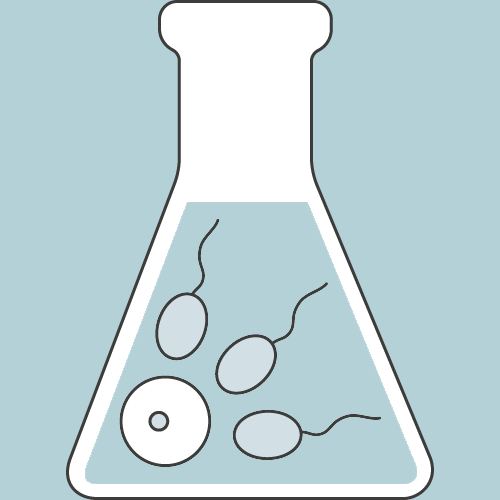
In the IVF method, around 100,000 sperm are introduced to each egg cell. The best, most vital sperm naturally makes its own way into the oocyte.
Indications:
IVF is the preferred conventional method for assisted reproduction in patients with endometriosis, PCOS, or obstructed fallopian tubes AND the male partner has a normal sperm analysis.
Success rates
The chance of successfully becoming pregnant with the assistance of IVF is about 30-40% per cycle, dependent on the age of the individual partners, hormonal balances, the presence of underlying diseases (diabetes, high blood pressure, etc.) and lifestyle factors (being overweight, stress, nicotine and excessive alcohol consumption, etc.).
How IVF works
The seven steps of IVF-treatment:
- Hormonal stimulation of the ovaries
- Follicular puncture
- Collection of semen
- Fertilization through IVF
- Embryo transfer
- Assisted laser hatching
- Nidation phase
1. Hormonal stimulation of the ovaries
Treatment with IVF (in-vitro fertilization) or ICSI (intracytoplasmic sperm injection) nearly always (with very few exceptions) takes place after hormonal stimulation of the ovaries. The goal of hormonal therapy is to increase the number of maturing follicles in both ovaries to obtain several fertile eggs.
A preparatory phase (“down-regulation”) is intended to prepare the body for the actual stimulation by suppressing the body's own hormone production or release. This so-called "down-regulation" can take place either by applying daily injections under the skin (subcutaneous) or through oral intake of certain medications. The advantage of the preparatory phase is that controlling the stimulation phase becomes far easier.
FSH (follicle-stimulating hormone) and LH (luteinizing hormone) are used in their pure hormonal form or combined for the subsequent stimulation of the ovaries. Throughout the hormonal treatment, a specific dose (dependent on weight, age, etc.) is administered daily at the same time every day through subcutaneous injections.
The use of these medications and how they are applied will be explained in detail when starting treatment. The injection of these medications will be demonstrated so that patients and/or their partners can inject themselves daily, so that daily visits to the doctor are not necessary.
The number of follicles, the course of their growth, and the development of the uterine lining will be closely observed per ultrasound. Once the follicles reach a certain size, ovulation will be triggered using the hormone hCG (human chorionic gonadotropin). This technique helps determine the optimal time for egg cell retrieval—namely, shortly before ovulation.
2. Follicular puncture
The egg cells are removed through transvaginal extraction (through the vagina) under ultrasound guidance 36 hours after the application of the “ovulation stimulating shot”. A needle is first used to focus the follicles under ultrasound guidance, and then to puncture and collect the follicular fluid containing the egg cells (oocytes). Afterward, the egg cells are separated from the follicular fluid under microscopic view and transferred to a special culture medium and placed in an incubator at 37°C.
On average, the follicular puncture only lasts 5-15 minutes, depending on the number of follicles. In order to make the procedure more comfortable, our patients receive a combination of sleep and pain medication. The follicular puncture is performed on an outpatient basis, and a post-procedural 1-2-hour observational period in our relaxation rooms is necessary afterward.
3. The semen collection
The semen is obtained on the day of the follicular puncture through masturbation after 2-3 days of abstinence (no ejaculation). This is sometimes difficult, especially when “ordered” to do so, or due to stress/time pressure. Therefore, in seldom circumstances, it is also possible to bring the semen sample from home. It should be noted, however, that the period between semen collection and delivery of the sample to the institute cannot exceed two hours.
4. Fertilization: conventional IVF method
The fertilization of the extracted egg cells happens on the same day as they were retrieved. The sperm and the egg cells are brought together in a small bowl using a special preparation technique, which allows the fertilization process to take place in a "natural" way. The next day, a microscopic examination is performed to see how many of the egg cells show signs of fertilization (for example, if two pronuclei and two polar bodies are formed).

5. The embryo transfer
2-5 days after fertilization, the embryo is brought into the uterus using a thin, flexible plastic tube (catheter) under ultrasound guidance. Which day the embryo transfer will take place on is dependent on the number of fertilized eggs. If 1-4 egg cells are successfully fertilized, then they are usually transferred to the uterus 2-3 days after the follicular puncture. During the 2-3 days, the embryos are assessed daily regarding their development (cell division) and other specific requirements, such as cell division rates and consistency of cell division. The embryos with the best quality are selected for transfer.
If there are five or more embryos, then the transfer is performed five days after fertilization, which is referred to as a blastocyst transfer. A blastocyst is the furthest stage of development that can take place outside of the human body. If more than five embryos of top-quality are available for transfer, then these can be frozen.
The transfer of the embryos into the uterus only lasts a few minutes and is usually painless. We advise our patients to relax in our relaxation rooms for 20-30 minutes afterward.
6. Assisted Laser Hatching (ALH)
The egg cell and the embryo are surrounded by a solid shell, the so-called zona pellucida. When the embryo reaches the blastocyst stage, it must hatch out of this shell in order to implant itself in the uterus. Sometimes, however, this sheath is "hardened" or thicker than average, which makes implantation more difficult or even impossible. When this happens, the incision of the zona pellucida using a laser makes it easier/possible for the growing embryo to "hatch" and thus implant itself into the uterine lining.
7. Nidation phase (Implantation phase, Luteal Phase)
With the follicular puncture begins the second half of the menstrual cycle, the so-called luteal phase. Throughout this phase, the hormones produced by the corpus luteum are supported using medication, to ensure that the endometrium is optimally prepared for the implantation of the embryo. The medication used in the luteal phase can be applied as intramuscular depot injections, taken orally, or through vaginal suppositories.
The earliest that a pregnancy can be determined is two weeks after fertilization of the oocytes through the detection of the pregnancy hormone hCG in the blood or urine. If the pregnancy test results are positive, support of the luteal phase is continued until the 12th week of pregnancy.
- Overview
- IVF
- IVF in 10 steps
- Cause of miscarriages
- Assisted-Hatching
- Chipsi
- Application of Seminal Plasma
- Egg cell donation
- Genetics
- Testicular puncture
- Insemination
- ICSI
- Fertility treatment in same-sex couples
- The dream to have children despite cancer
- Complementary Medicine
- Cryopreservation
- Male Infertility
- PICSI
- Psychotherapeutic support
- Sperm and egg cell donations
- Social Freezing