Kostenloser Infoabend
Lernen Sie uns kennen!24.Juli 2018 um 17:30 UhrLainzerstraße 6, 1130 Wien


Setzen Sie sich mit uns in Verbindung
 | +43/1/877 77 75 |
 |  |
 |  |
Was unsere Patienten sagen
Liebes Feichtinger-Team!
Nach 3 Versuchen sind wir nun zu Fünft. Da das ohne Euch nicht möglich gewesen wäre, ein ganz herzliches Dankeschön an alle. Familie S.Professionelles & sympathisches Team
Sehr strukturierter Behandlungsprozess, immer freundlich und hilfsbereit.Aus unserem „Tuho wa bohu“ ...
... unserem glücklichen „Chaos“ schicken wir Ihnen gern ganz herzliche Grüße. A. und S. sind ein Segen. Etwas anstrengend aber sehr beglückend, wobei die Anstrengung nur in der Fülle der Aufgaben besteht, nicht in deren Charakter. Ihr Leben ist sicher auch sehr sehr dicht - dafür wünschen wir ihnen Freude, Humor und immer ausreichend Kraft. In Dankbarkeit Ihre U. H.Gute Beratung mit positivem Resultat
Insgesamt waren wir mit der Behandlung sehr zufrieden! Wir hätten uns gewünscht, dass die nachfolgenden Schritte der Hormonbehandlung etwas früher erklärt worden wären (wann welche Spritzen gegeben werden). Ist aber, wie gesagt, nur ein kleines Manko. Die Praxis inkl. Team würden wir jedenfalls ohne Einschränkung weiterempfehlen!Liebes Wunschbaby Team!
Mit dieser frohen Nachricht von der Erfüllung unseres langjährigen Herzenswunsches, möchten wir Ihnen ein großes DANKE sagen für die einerseits so kompetente, andererseits menschlich so angenehme Betreuung in Ihrem Institut!
Wir haben uns stets bestens betreut und beraten gefühlt.
Mit ganz lieben Grüßen
B. und C. H.Lesen Sie mehr

Application of Seminal Plasma
The nidation (implantation) of the embryo into the uterine lining (endometrium) of the mother is a complex process. To prevent maternal rejection of the embryo, the mother’s body must first build up an immune tolerance to the embryo, of which half of the genes consists of "different” genetic material—namely, that of the father.
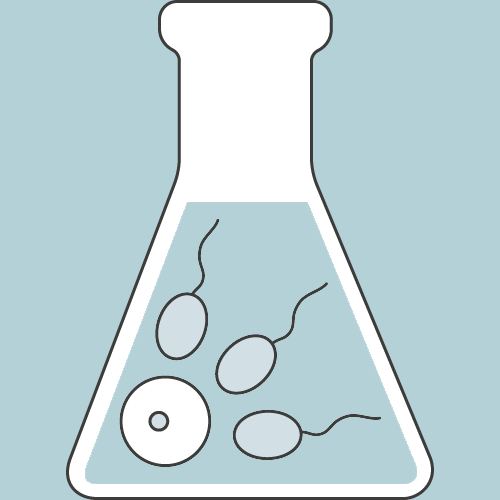
Seminal plasma – ejaculate without sperm – can support this process. Seminal plasma is composed primarily of fluid secretions produced by the seminal vesical and the prostate. The second messengers TGF and interleukin, both contained in the seminal plasma, have several important roles in embryo implantation. First and foremost, they have a major influence on inflammatory reactions, as well as other immunological responses. Secondly, they prepare the endometrium for the coming embryo, and finally, they promote the growth of endometrial blood vessels.
Through centrifugation, the ejaculate is separated into seminal plasma and sperm. Approximately 0.1ml of seminal plasma is drawn into a thin catheter and, after the follicle puncture (the retrieval of the egg cells), the catheter is introduced into the female’s cervix. This process is entirely painless. The sperm is used to fertilize the eggs obtained during the follicle puncture.
This method has been used routinely for some time at the Wunschbaby Institute, and internal evaluations have shown that it increases the probability of inducing pregnancy.
- Overview
- IVF
- IVF in 10 steps
- Cause of miscarriages
- Assisted-Hatching
- Chipsi
- Application of Seminal Plasma
- Egg cell donation
- Genetics
- Testicular puncture
- Insemination
- ICSI
- Fertility treatment in same-sex couples
- The dream to have children despite cancer
- Complementary Medicine
- Cryopreservation
- Male Infertility
- PICSI
- Psychotherapeutic support
- Sperm and egg cell donations
- Social Freezing